
Home

Co-op Spotlight

1

UGDSB Cooperative Education Employer of the Week

We’re proud to highlight the Animal Health Laboratory at the University of Guelph as our Co-op Employer of the Week!

This full-service veterinary diagnostic lab provides high-value analytical and diagnostic services for the agricultural, food, and veterinary sectors, playing a vital role in animal health and food safety.

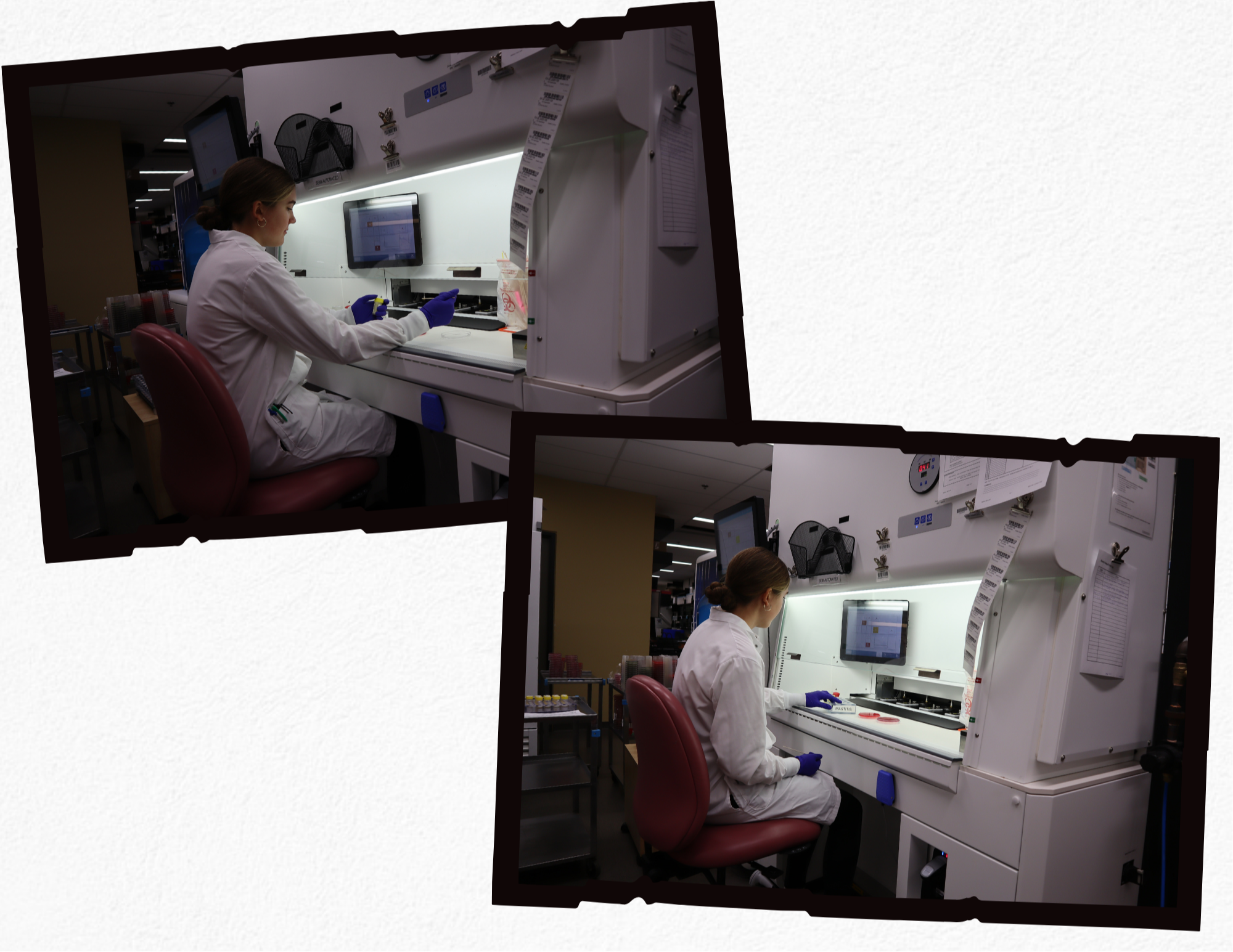
High school co-op students are an important part of the bacteriology lab team. They assist with processing milk samples for the isolation of mastitis pathogens in dairy cattle—a critical task for maintaining herd health. Their work includes plating samples and performing milk and bedding count testing. Beyond the lab bench, students help keep operations running smoothly by filing documents, checking lot numbers of media reagents, and managing supplies in line with strict Quality Assurance standards.

The team at the Animal Health Lab values the fresh energy and perspective that co-op students bring. One of their proudest success stories is a former high school co-op student who continued working with the lab through university while completing a Bachelor of Science at the University of Guelph—and is now a full-time employee. Stories like this show the incredible impact co-op experiences can have on a student’s future.

In a fast-paced environment where many technicians perform different tests simultaneously, the lab is always impressed by how quickly co-op students learn new tasks and their ability to work independently. Their adaptability and eagerness to contribute make them an asset to the team every time.

Thank you to the Animal Health Laboratory for your continued support of co-op education and for providing such meaningful opportunities for students to learn and grow!

Employers and community partners, Upper Grand District School Board students are ready to join your team!

Get involved in the UGDSB’s Cooperative Education program:

  • Be part of a mutually beneficial relationship by offering cooperative education work placements

  • Share expertise, knowledge skills and materials

  • Gain access to a diversely talented and motivated group of students who may bring new ideas and fresh perspectives to your business

  • Students can contribute by working from home to complete the tasks and duties you’ve assigned or by physically attending your work site

  • We are looking for employers to provide co-op opportunities in multiple sectors including trades, arts & culture, media, communications, hospitality, information technology, retail, science, and more

  • UGDSB co-op teachers will help you find the right match for your business

Timing / Scheduling

High school co-op is offered during 2 semesters and for summer school.

The schedule is as follows:

  • Semester 1: September – January

  • Semester 2: February – June

  • Summer School – July; Placements start end of June or first week of July

Semester 1 runs from September – January

  • Students are in class preparing for work and attending interviews for the first couple weeks

  • Placements start the third week of September 

  • Exact dates vary by high school

Semester 2 runs from February – June

  • Students are in class preparing for work and attending interviews for the first couple weeks

  • Placements start mid February

  • Exact dates vary by high school

Summer Co-op:

  • Students attend interviews in May and June

  • Placements run full days in July

For more information:

Contact – Charles Benyair, Co-op Curriculum Lead, UGDSB, 519-574-0098

What is Co-op?

The Co-operative Education Program allows students to earn secondary school credits while completing a work placement.

Co-op students can try out an occupation or different occupations in an actual work environment before deciding which career path is right for them.

Consisting of a co-op course, a related curriculum course in any subject and a work placement, the program is monitored by a co-operative education teacher.

Two co-op credits can be applied towards high school graduation requirements although there is no limit on earning optional co-op credits.

Co-op placements are arranged for students by their secondary school. All placements are required to follow Ministry of Education policy and guidelines.

Why Take Co-op?

Co-op lets you:

  • Explore Careers

  • Connect Learning to Your Life

  • Develop Skills & Knowledge

  • Build Your Resume

  • Individualize Your Learning

  • Expand Your Network