
Students in the Upper Grand District School Board (UGDSB) continue to make strong gains in key areas of mathematics and literacy, according to the 2025–26 EQAO results released today.
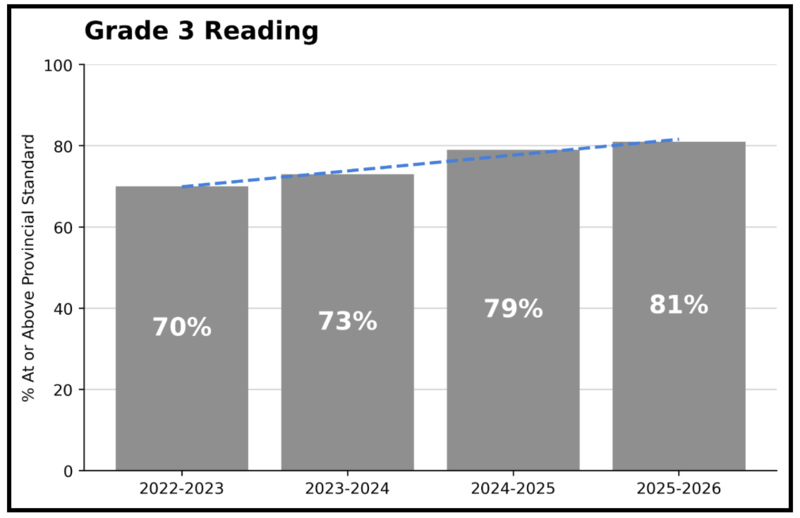
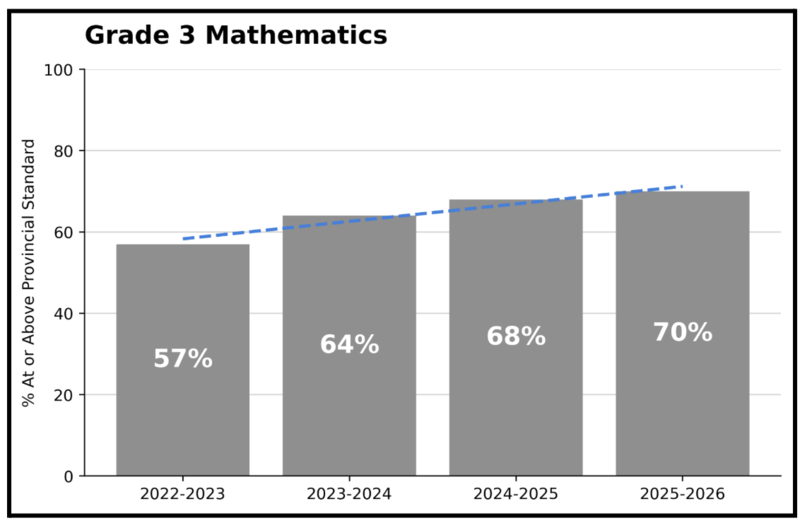
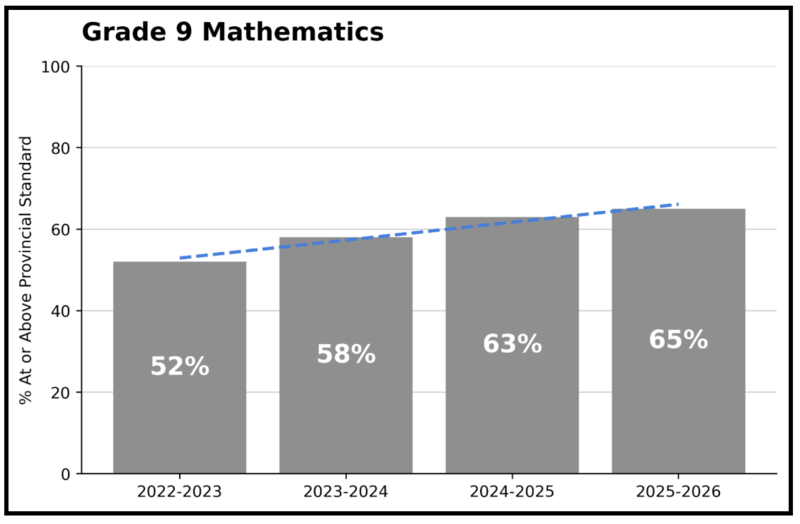
The latest results show continued improvement in all Grade 3 assessment areas and Grade 9 mathematics, with particularly strong multi-year growth in the areas the UGDSB has identified for laser focused improvement: Grade 3 reading, Grade 3 mathematics and Grade 9 mathematics.
The UGDSB also continues to perform above provincial results across all Grade 3, Grade 6 and Grade 9 assessment areas.
“These results reflect the incredible work happening in our classrooms every day,” said UGDSB CEO Peter Sovran. “We have been very intentional about where we focus our efforts and resources. By investing in our people, using evidence to understand where students need support, and staying focused on strong classroom instruction, we are seeing sustained improvement in student achievement. I want to thank our students for their hard work and our educators, school leaders, staff and families for everything they do to support student success.”
2025–26 results highlights
Grade 3 students continued to make gains across reading, writing and mathematics:
81% of Grade 3 students met or exceeded the provincial standard in reading.
71% met or exceeded the standard in writing.
70% met or exceeded the standard in mathematics.
Grade 9 mathematics also continued its upward trend, with 65% of students meeting or exceeding the provincial standard.
Grade 6 results were at 89% of students meeting or exceeding the standard in reading, 88% in writing and 57% in mathematics. UGDSB results remained above provincial results in all three Grade 6 assessment areas.
On the Ontario Secondary School Literacy Test (OSSLT), 87% of first-time eligible UGDSB students were successful, maintaining the previous year's result. Among previously eligible students, the success rate was 57%.
Sustained progress in UGDSB's Laser Focus areas
The latest results build on several years of improvement in areas where the UGDSB has deliberately focused resources, professional learning, instruction and student supports.
Through the board's Laser Focus approach, schools use student achievement data to identify areas of greatest need, target supports and monitor progress, with particular attention on Grade 3 reading and mathematics and Grade 9 mathematics.
UGDSB continues to outperform provincial results
In 2025–26, UGDSB achievement was above provincial results across all Grade 3, Grade 6 and Grade 9 EQAO assessment areas:
Assessment | UGDSB | Ontario | Difference |
Grade 3 Reading | 81% | 75% | +6 |
Grade 3 Writing | 71% | 67% | +4 |
Grade 3 Mathematics | 70% | 65% | +5 |
Grade 6 Reading | 89% | 86% | +3 |
Grade 6 Writing | 88% | 85% | +3 |
Grade 6 Mathematics | 57% | 52% | +5 |
Grade 9 Mathematics | 65% | 59% | +6 |
OSSLT – First-Time Eligible | 87% | 86% | +1 |
The results are particularly notable when compared with where the board stood several years ago. In 2022–23, UGDSB results were three percentage points below the province in Grade 3 reading, three points below in Grade 3 mathematics and two points below in Grade 9 mathematics. In 2025–26, UGDSB is now five to six percentage points above provincial results in each of those areas.
Investing in strong classroom instruction
Behind the focus on student achievement is a system-wide commitment to strong, consistent and responsive classroom instruction.
In mathematics, students benefit from dedicated instructional time, early screening and diagnostics, small-group instruction, purposeful practice and opportunities to talk about and demonstrate their mathematical thinking. At the secondary level, educators use diagnostic and achievement data to identify learning needs early and provide targeted opportunities to strengthen foundational skills.
In literacy, the focus remains on structured, explicit and evidence-based reading instruction. In the early grades, students receive dedicated daily literacy instruction focused on foundational reading skills, supported by differentiated small-group learning and access to appropriate reading materials. As students progress through elementary school, instruction expands to strengthen fluency, vocabulary, comprehension, reading and writing.
Across both mathematics and literacy, the approach is grounded in a common principle: understand where students are in their learning, provide strong classroom instruction, identify needs early and respond with targeted support.
While there is more work ahead, the sustained progress reflects the UGDSB's commitment to keeping student achievement at the centre of its work and ensuring every student has the foundational skills and support they need to succeed.